Gross income vs. Profit: Understanding the £50k MTD threshold.
When HM Revenue & Customs (HMRC) announced that Making Tax Digital (MTD) for Income Tax would become mandatory in April 2026 for those earning over £50,000, many independent business owners breathed a sigh of relief.
"My profits are nowhere near £50,000," they thought. "I'm safe."
Unfortunately, that assumption is catching thousands of people out. The most important—and most misunderstood—rule of the new MTD legislation is how HMRC calculates that £50,000 threshold.
Spoiler alert: It has absolutely nothing to do with your profit. Here is exactly how the MTD threshold works, and how to check if you are legally required to change how you do your taxes in 2026.
The golden rule: Gross income, not profit.
HMRC determines your MTD start date based on your "qualifying income".
Qualifying income is your gross income—meaning your total sales, turnover, or gross rental receipts before you deduct a single business expense.
HMRC is not looking at what you take home; they are looking at what flows into the business. You calculate this qualifying figure before deducting any allowable business expenses, tax reliefs, or personal allowances.
Let's look at a real-world example: Imagine you are a freelance designer. You invoice your clients for £62,000 this year. However, you spent £30,000 on software subscriptions, travel, and a new laptop.
Your Profit: £32,000
Your MTD Qualifying Income: £62,000
Even though your actual profit is well under the line, your gross turnover pushes you over the £50k threshold. You must comply with the new MTD rules from April 2026.
The combined income trap
The second trap to watch out for is having multiple streams of income. HMRC requires you to add your self-employment income and your property rental income together.
For example, if you earn £35,000 as a sole trader and receive £20,000 in gross rental income from a buy-to-let property, your total qualifying income is £55,000. Because this combined total pushes you over the £50,000 mark, you fall under the new MTD legislation.
What DOESN'T count toward the £50k?
The good news is that HMRC only cares about self-employment and property income for this specific test. You do not need to include the following when calculating your qualifying income:
Your salary from an employer (PAYE income).
Savings interest or pension income.
Dividends from a limited company.
So, if you earn £28,000 from a day job under PAYE and £35,000 from a side hustle as a sole trader, your MTD qualifying income is only £35,000. You are safe from the initial April 2026 rollout (though you will be mandated in April 2027 when the threshold drops to £30,000).
How to check your status right now
HMRC will assess your status based on the gross income reported on your 2024/2025 Self Assessment tax return.
If you want to know exactly where you stand, pull up your latest tax return and look at your total turnover/sales and your total gross rents. Add them together. If that number is hovering anywhere near £50,000, you need to prepare.
Stop guessing. Start automating.
The transition to continuous digital record-keeping doesn't have to be a nightmare. If you are crossing the threshold, the easiest way to ensure compliance is to ditch the manual spreadsheets and let your bank do the heavy lifting.
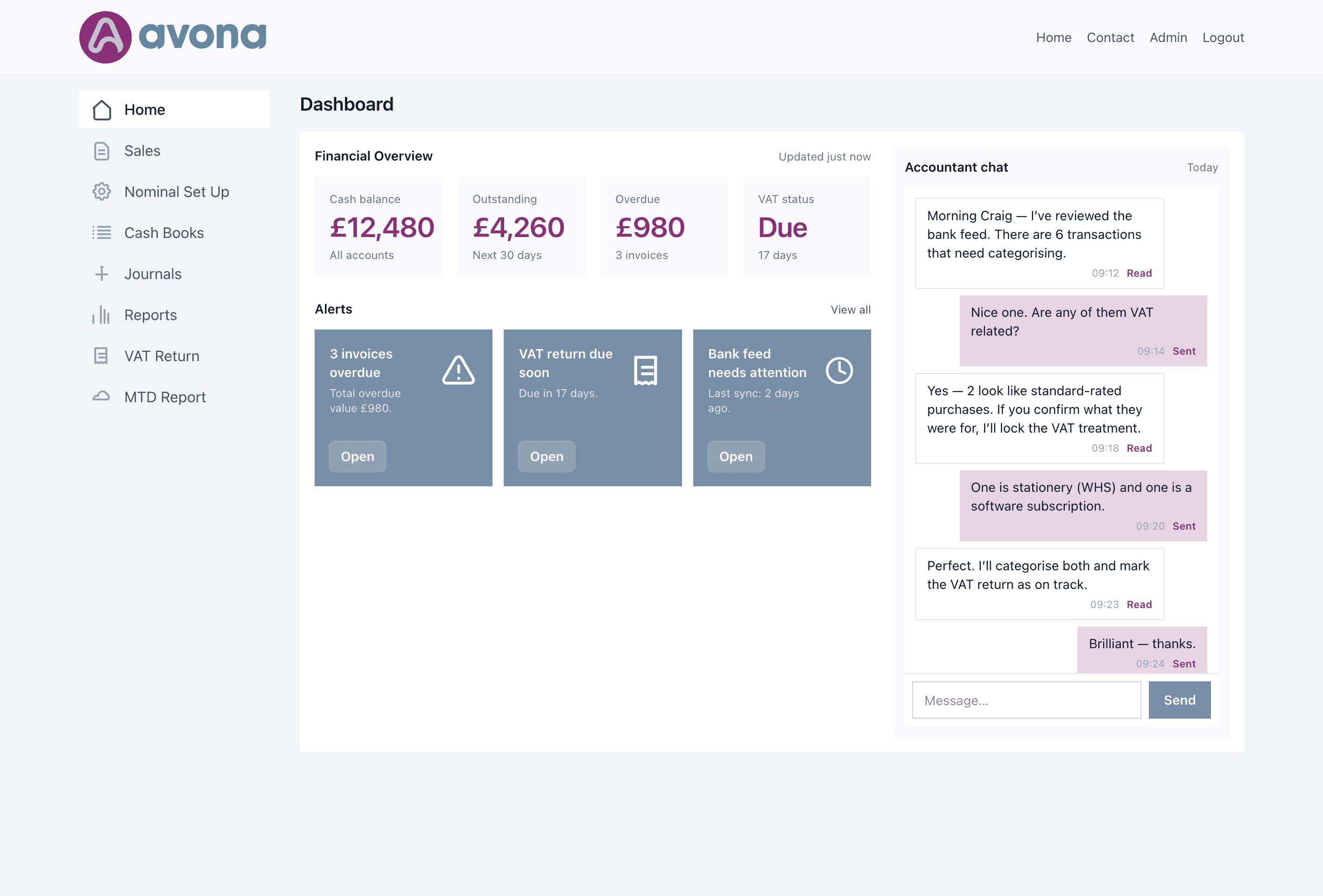
Avona connects securely to your business bank account, automatically tracking your gross income and categorising your expenses. It removes the guesswork, ensuring you always know exactly where you stand against HMRC’s thresholds.
[Join the Avona Waitlist Today] to automate your compliance and get back to running your business.
Blogs
More insights.
Discover expert insights, trends, and tips.