
BG Line

MTD for Income Tax vs. MTD for VAT: Lessons learned from the 2019 rollout
01/03/2026

01/03/2026

If the phrase "Making Tax Digital" gives you a distinct sense of déjà vu, you are not alone.

For years, the UK business world has been bracing for, adapting to, and sometimes ignoring HM Revenue & Customs' (HMRC) flagship digitization project. Back in April 2019, HMRC successfully launched the first phase: MTD for VAT. Fast forward to today, and the focus has shifted to the next, much larger demographic: sole traders and landlords.

Starting April 6, 2026, Making Tax Digital for Income Tax (MTD ITSA) becomes mandatory for anyone with a qualifying income over £50,000.

But as the 2026 deadline approaches, many independent business owners are making the exact same mistakes that VAT-registered businesses made back in 2019. Here are the three crucial lessons we learned from the MTD for VAT rollout, and how you can avoid the chaos this time around.

Lesson 1: The "HMRC Will Delay It" myth

When MTD for VAT was first announced, a significant portion of the business community simply didn’t believe it would happen. Industry forums were full of people insisting that HMRC’s IT systems weren't ready and that a last-minute delay was inevitable.

They were wrong. April 2019 arrived, the portal opened, and the legal mandate took effect.

We are seeing the exact same complacency with MTD for Income Tax. Because the Income Tax rollout has been delayed in the past (partly due to the pandemic), many sole traders are banking on another last-minute reprieve.

The Reality for 2026: The April 2026 deadline is now written firmly into legislation. The software testing sandbox is live, the phased £50k and £30k thresholds are locked in, and HMRC has built the infrastructure. Waiting for a delay that isn't coming is the fastest way to end up non-compliant.

Lesson 2: "Bridging Software" is a false economy

During the VAT rollout, HMRC created a temporary lifeline for businesses that refused to give up their spreadsheets: bridging software. This was a bolt-on piece of software that allowed you to take a messy Excel file and "bridge" it digitally to HMRC’s portal.

Thousands of businesses took this route to avoid upgrading their accounting systems. However, they quickly learned that bridging software is an administrative nightmare.

  • It doesn't save time: You still have to manually type in every single transaction.

  • It doesn't prevent errors: If you type a typo into your spreadsheet, the bridging software just sends that typo straight to HMRC.

  • It’s a broken digital link: MTD rules require an unbroken digital link from the original transaction to the submission. Spreadsheets inherently invite human error.

The Reality for 2026: MTD for Income Tax requires four quarterly updates a year, plus a final declaration. Trying to manage that volume of reporting with a clunky spreadsheet and a third-party bridging tool is a recipe for missed deadlines. The businesses that thrived during the VAT rollout were the ones that upgraded to native, bank-connected software from day one.

Lesson 3: The penalty hammer is methodical

Before MTD for VAT, HMRC’s penalty system was somewhat rigid. With the introduction of digital reporting, HMRC completely overhauled how they punish non-compliance, introducing a points-based system.

During the VAT rollout, businesses that assumed HMRC would be "lenient" during the transition period were shocked to find penalty points racking up automatically for late submissions. Once the penalty threshold was breached, the £200 automatic fines began flowing.

The Reality for 2026: This exact same points-based penalty system applies to MTD for Income Tax. Every time you miss one of your new quarterly deadlines (7 August, 7 November, 7 February, and 7 May), you receive a point. Hit four points, and you receive an automatic £200 fine—with an additional £200 fine for every subsequent late submission. HMRC’s automated systems do not forget, and they do not accept "my spreadsheet crashed" as an excuse.

The ultimate lesson: Automate early

The single biggest takeaway from the MTD for VAT rollout is this: the businesses that automated early experienced zero disruption.

By the time the deadline arrived, their software was already pulling in bank data, categorizing expenses, and preparing the submission in the background. They simply clicked a button and got back to work.

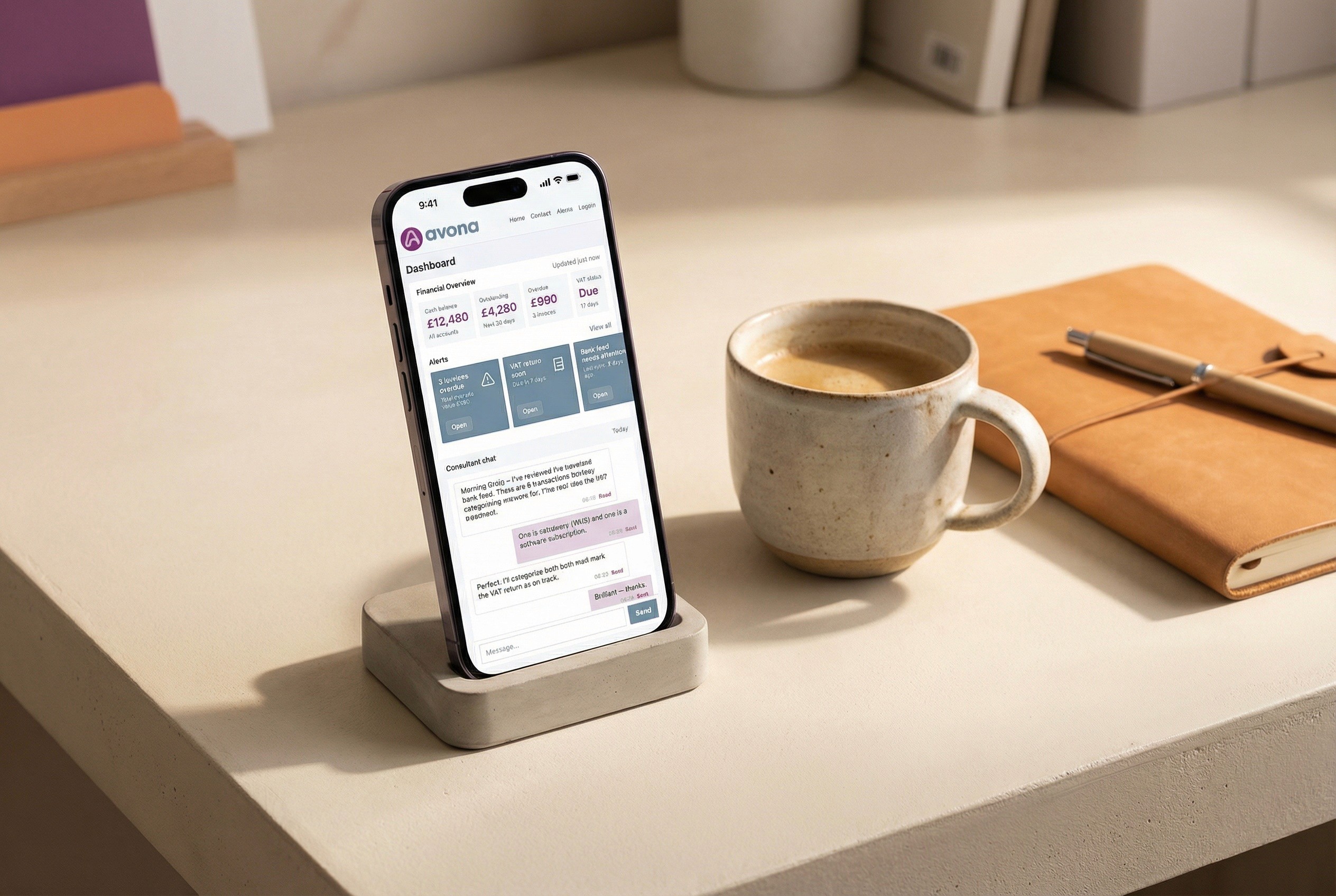
Avona is built to give sole traders and landlords that exact same stress-free experience for Income Tax. We don't use clunky bridging systems. We use secure Open Banking connections to pull your data directly from the source, creating a flawless digital link and eliminating manual data entry entirely.

Don't wait for the 2026 scramble.

[Join the Avona Waitlist Today] to secure early access and handle the MTD transition like a pro.

Blogs

Read Our Blogs and News

Discover expert insights, trends, and tips that help you navigate the world of finance and technology.

FAQ

Frequently Asked Questions

Need help? Our FAQ section covers all the basics to guide your Spendex experience smoothly.

FAQ

Frequently Asked Questions

Need help? Our FAQ section covers all the basics to guide your Spendex experience smoothly.

How does the AI in Spendex work?

Is Spendex free to use?

Is my financial data safe with Spendex?

What accounts can I connect to Spendex?

Can I manage multiple wallets or users?

What insights does Spendex provide?

Can I collaborate with others on my account?

What happens if I cancel my subscription?

Is there a mobile app for Spendex?

How do I contact support?

Can I try Avona before I commit to a subscription?

What is the difference between Avona Lite and Avona Pro?

Am I tied into a long-term contract?

What payment methods do you accept?

How do I cancel my subscription?

What happens to my data if I cancel my account?

What if my bank connection expires?

Does Avona handle Jointly Owned Properties?

What is the difference between Avona Lite and Avona Pro?

Does Avona replace my accountant?

How does the AI in Spendex work?

Is Spendex free to use?

Is my financial data safe with Spendex?

What accounts can I connect to Spendex?

Can I manage multiple wallets or users?

What insights does Spendex provide?

Can I collaborate with others on my account?

What happens if I cancel my subscription?

Is there a mobile app for Spendex?

How do I contact support?

Can I try Avona before I commit to a subscription?

What is the difference between Avona Lite and Avona Pro?

Am I tied into a long-term contract?

What payment methods do you accept?

How do I cancel my subscription?

What happens to my data if I cancel my account?

What if my bank connection expires?

Does Avona handle Jointly Owned Properties?

What is the difference between Avona Lite and Avona Pro?

Does Avona replace my accountant?

How does the AI in Spendex work?

Is Spendex free to use?

Is my financial data safe with Spendex?

What accounts can I connect to Spendex?

Can I manage multiple wallets or users?

What insights does Spendex provide?

Can I collaborate with others on my account?

What happens if I cancel my subscription?

Is there a mobile app for Spendex?

How do I contact support?

Can I try Avona before I commit to a subscription?

What is the difference between Avona Lite and Avona Pro?

Am I tied into a long-term contract?

What payment methods do you accept?

How do I cancel my subscription?

What happens to my data if I cancel my account?

What if my bank connection expires?

Does Avona handle Jointly Owned Properties?

What is the difference between Avona Lite and Avona Pro?

Does Avona replace my accountant?

Not sure if the taxman is coming for you yet?

If you're a sole trader or landlord, the rules change on 6 April 2026. You are legally required to switch to software like Avona if your total income was over £50,000 in the 2024/25 tax year.


HMRC looks at your gross turnover from sole trades and rentals—that means all the money you brought in before you deducted your expenses, not your final profit.

Not sure if the taxman is coming for you yet?

If you're a sole trader or landlord, the rules change on 6 April 2026. You are legally required to switch to software like Avona if your total income was over £50,000 in the 2024/25 tax year.


HMRC looks at your gross turnover from sole trades and rentals—that means all the money you brought in before you deducted your expenses, not your final profit.

Not sure if the taxman is coming for you yet?

If you're a sole trader or landlord, the rules change on 6 April 2026. You are legally required to switch to software like Avona if your total income was over £50,000 in the 2024/25 tax year.


HMRC looks at your gross turnover from sole trades and rentals—that means all the money you brought in before you deducted your expenses, not your final profit.

Powerful tax compliance with the complicated bits hidden. We keep HMRC happy so you don't have to.

© 2025 Avona Limited. All rights reserved.

Avona Ltd acts as an agent of Finexer Ltd (FRN 925695).
Open Banking services are provided by Finexer Ltd, which is authorised and regulated by the Financial Conduct Authority under the Payment Services Regulations 2017

Powerful tax compliance with the complicated bits hidden. We keep HMRC happy so you don't have to.

© 2026 Avona Ltd. All rights reserved.

Avona Ltd acts as an agent of Finexer Ltd (FRN 925695).
Open Banking services are provided by Finexer Ltd, which is authorised and regulated by the Financial Conduct Authority under the Payment Services Regulations 2017.

Powerful tax compliance with the complicated bits hidden. We keep HMRC happy so you don't have to.

© 2026 Avona Ltd. All rights reserved.

Avona Ltd acts as an agent of Finexer Ltd (FRN 925695). Open Banking services are provided by Finexer Ltd, which is authorised and regulated by the Financial Conduct Authority under the Payment Services Regulations 2017