
Making Tax Digital · Sole traders
Chimney sweeps: power sweeping kit, van soot disposal, and seasonal MTD filing
ONLY£15A MONTHA practical guide to chimney sweep equipment, trade memberships, soot disposal, seasonal income and quarterly Making Tax Digital records.
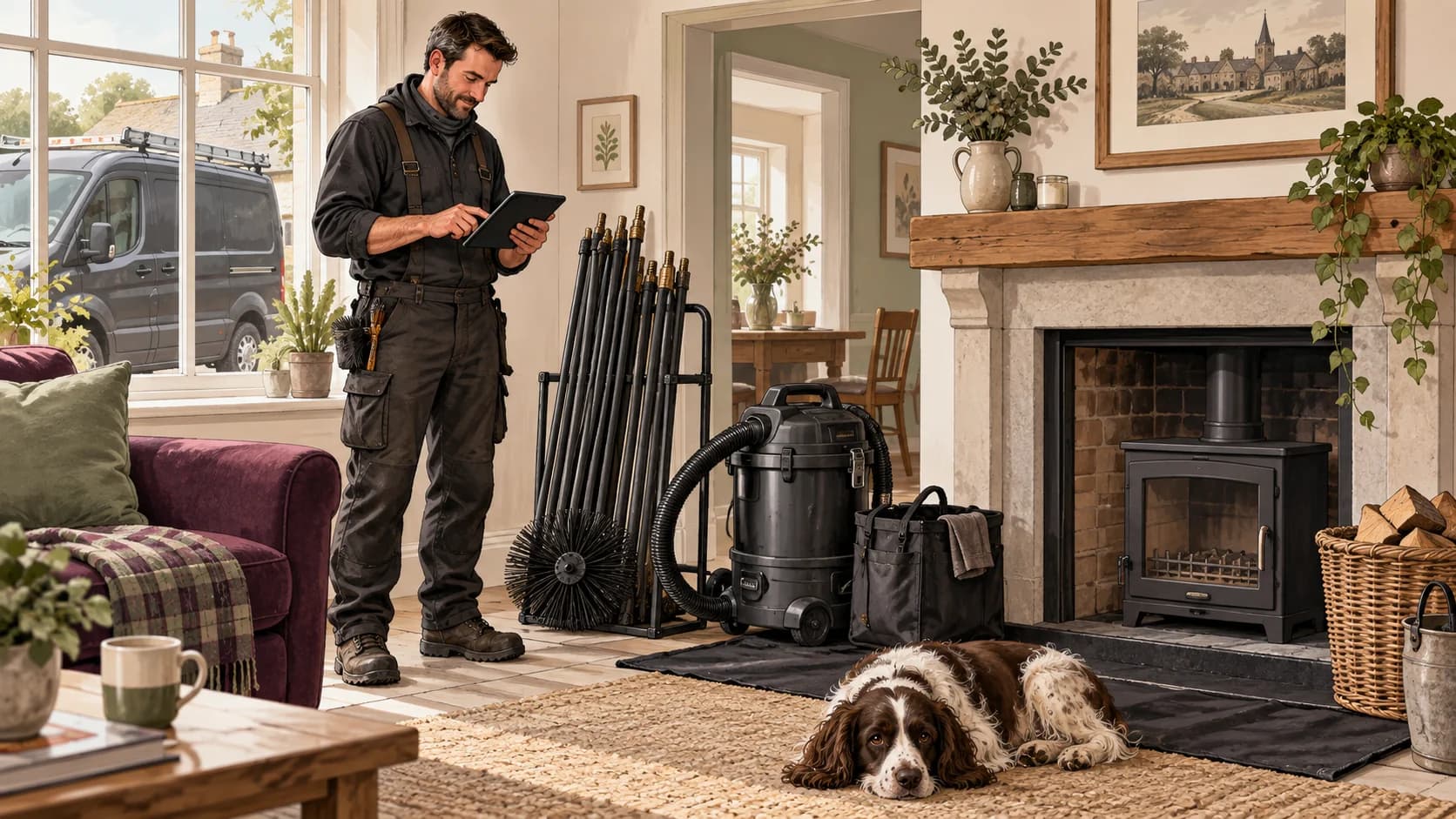
An autumn diary full of chimney sweeps can make the business feel comfortably profitable. A quieter spring, a replacement vacuum and the next tax payment can give a different impression. Good records help you understand both parts of the year.
Making Tax Digital brings more regular reporting, but it does not require your income to arrive evenly. For a seasonal sweeping business, the useful habit is to separate customer earnings, operating costs and money set aside while work is busy.
When Making Tax Digital applies
Making Tax Digital for Income Tax changes how qualifying sole traders and landlords keep records and report income. Under HMRC’s timetable, the starting points are:
- From 6 April 2026, if qualifying income exceeded £50,000 in 2024–25.
- From 6 April 2027, if qualifying income exceeded £30,000 in 2025–26.
- From 6 April 2028, if qualifying income exceeded £20,000 in 2026–27.
Qualifying income generally means gross self-employment and property income combined, before expenses. Salary, pension income and dividends do not count towards this particular test. Check HMRC’s qualifying income guidance, including the treatment of VAT and shorter accounting periods where relevant.
The test uses the relevant earlier tax year; passing a figure during a busy month does not mean you join that day. Exemptions can apply. These rules concern your individual business and property income, rather than a limited company’s Corporation Tax reporting.
What can a chimney sweep claim?
Business expenses must satisfy the business purpose rule in section 34 of the Income Tax (Trading and Other Income) Act 2005. HMRC’s guidance also explains why private use matters.
Keep records for costs such as:
- Rotary power-sweeping rods and replacement nylon whip heads.
- HEPA-filtered soot vacuums, filters and servicing.
- Smoke pellets, protective sheeting and heavy soot sheets.
- Certificate books, booking software and business telephone use.
- Relevant NACS or APICS membership, professional insurance and existing-trade training.
Membership costs should relate to your actual business. Do not describe every trade association membership as a compulsory statutory registration. If you also install or service appliances, retain the records for the qualifications, registration and insurance appropriate to that work.
HMRC allows relevant training for an existing business, including useful skills that support it. A course starting an unrelated trade needs a separate assessment; paying for it from the business account does not settle the tax treatment.
Equipment purchases and repairs are different records
A new vacuum is a purchase of equipment; replacement filters are consumables, and repairing its motor is maintenance. Under the cash basis, most business equipment can be deducted when paid for. Traditional accounting normally uses capital allowances for equipment purchases.
Do not claim a notional depreciation charge as a tax expense. If you finance a sweeping system, keep the contract and distinguish purchase funding from interest or rental charges. Loan capital repayments do not create a second deduction for the same equipment.
Van costs and soot disposal
Your van may carry rods, sealed containers, protective sheets and customer paperwork. Keep receipts for business waste services and check whether your transport activities require waste carrier registration in England. Other UK nations have their own arrangements. A disposal receipt is useful evidence of both the service bought and its business purpose.
For an eligible vehicle, choose between simplified mileage and actual vehicle costs, subject to the rules and previous claims. The 2026–27 car and goods vehicle rate is 55p for the first 10,000 business miles and 25p thereafter. Mileage replaces the covered purchase and running costs; adding the same fuel, insurance and repairs again would duplicate relief.
Record each business journey’s date, purpose and distance. Travel between customers will generally have a business purpose. Home-to-work travel needs attention to the facts, particularly if you have a regular separate depot.
Worked example: a busy period with card fees
Lewis uses the cash basis and is not VAT registered. His customer payments for a reporting period comprise £13,800 taken by card and £2,200 in cash. The card provider keeps £276 before transferring the balance.
| Item | Amount |
|---|---|
| Gross card takings | £13,800 |
| Cash takings | £2,200 |
| Total business income | £16,000 |
| Card processing fee | £276 |
| Other allowable costs paid | £4,124 |
| Provisional result before further adjustments | £11,600 |
The bank receives £13,524 from the card provider, but that is not the whole card turnover. Lewis records the gross takings and the fee separately. Banking the £2,200 cash later is a transfer of money already recorded, not another sale.
These figures are illustrative. They are not a forecast of Lewis’s final tax bill, which depends on his annual profit, other income and relevant reliefs.
Use winter income to plan for quieter months
Review the cost of keeping the business open through spring and summer: insurance, vehicle commitments, membership renewals and essential maintenance can continue when the diary is lighter. Keep that operating reserve distinct from the money intended for tax.
A tax estimate becomes more useful as the records improve, but no running estimate can guarantee the final bill. Payments on account may also make the amount due differ from a simple percentage of this quarter’s profit. Revisit the reserve after substantial equipment purchases or changes in other income.
Keep the full card provider statement whether you use SumUp, Zettle or another service. It supplies the detail behind a bank settlement; a bank feed alone cannot explain every deduction.
A manageable quarterly routine
For a business using standard tax-year periods, the 2026–27 quarterly update deadlines are 7 August 2026, 7 November 2026, 7 February 2027 and 7 May 2027. Updates are cumulative: each covers the tax year so far. Calendar update periods are also available, with the same deadlines.
Keep digital income and expense records, reconcile them regularly and send the required totals through compatible software. The Income Tax (Digital Obligations) Regulations 2026 underpin the requirements; HMRC’s digital record-keeping notice explains the applicable directions. A bank feed needs supporting detail wherever a payment conceals fees, private purchases or several transactions.
Normally, record the transaction date, amount and relevant category, retaining supporting invoices or receipts. HMRC’s digital records guidance explains permitted simplifications and digital links where more than one software product is used.
Quarterly updates do not replace the annual tax return. The 2026–27 return is due by 31 January 2028, and normal tax payment dates continue. HMRC is not applying late quarterly update penalties for 2026–27, but digital records and updates are still required. That first-year approach does not waive other filing or payment obligations.
Keep bookkeeping steady through the seasons
A regular review of takings, equipment and reserves makes quieter months easier to plan. Avona.app is £15/month, with Avona AI supporting transaction categorisation. For help with seasonal cash flow and tax reporting, Avona Concierge is managed by chartered accountants and starts from £60/month.