
Making Tax Digital · Sole traders
Furniture restorers and upholsterers: specialist fabrics, workshop power, and MTD
ONLY£15A MONTHLearn how to record upholstery materials, restoration equipment, workshop utilities, customer advances and Making Tax Digital updates.
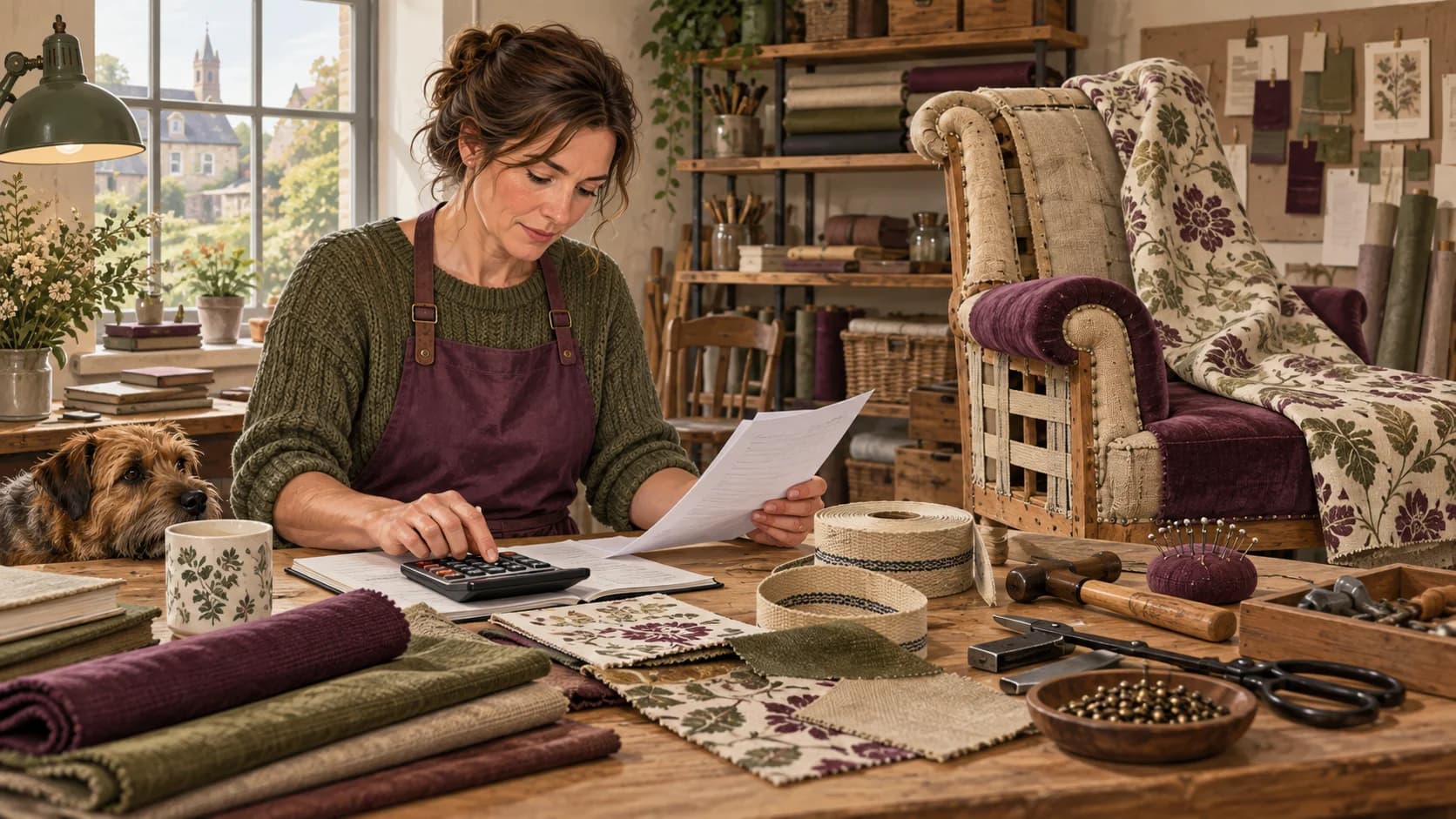
An upholstery commission can tie up fabric, workshop time and a customer advance for several weeks. Restoring furniture for resale adds another pattern: buying the piece, completing the work and waiting for a buyer.
Those activities need clear financial records even when they share the same workshop. Making Tax Digital is easier when you can distinguish customer-owned furniture from stock you own, reusable tools from materials, and receipts from amounts still outstanding.
When Making Tax Digital applies
Making Tax Digital for Income Tax changes how qualifying sole traders and landlords keep records and report income. Under HMRC’s timetable, the starting points are:
- From 6 April 2026, if qualifying income exceeded £50,000 in 2024–25.
- From 6 April 2027, if qualifying income exceeded £30,000 in 2025–26.
- From 6 April 2028, if qualifying income exceeded £20,000 in 2026–27.
Qualifying income generally means gross self-employment and property income combined, before expenses. Salary, pension income and dividends do not count towards this particular test. Check HMRC’s qualifying income guidance, including the treatment of VAT and shorter accounting periods where relevant.
The test uses the relevant earlier tax year; passing a figure during a busy month does not mean you join that day. Exemptions can apply. These rules concern your individual business and property income, rather than a limited company’s Corporation Tax reporting.
Fabrics and restoration materials
Specialist fabrics, foam, hair, webbing, springs, thread, polish and lacquer can be business costs when bought for customer work or business stock. Keep the supplier invoice and identify the job or stock use where helpful.
If you buy and supply the fabric, the customer’s payment for it normally forms part of your income. Record the purchase separately, including when supplied at cost. Where the customer buys their own fabric directly, your income may be only the labour or restoration fee.
HMRC’s materials and stock guidance explains the general expense categories. Record returned rolls, supplier credits and private materials clearly. Waste or offcuts do not create another deduction if the original purchase cost has already been claimed.
Customer furniture and stock you own
A chair left with you for repair remains the customer’s property unless the agreement says otherwise. Its estimated value is not a purchase expense in your accounts. Your charges and actual costs are the relevant trading transactions.
A chair bought by your business to restore and sell is different. Keep the acquisition record, restoration costs and sale receipt. Under traditional accounting, stock and work in progress can affect the year-end calculation. The cash basis generally follows eligible payments and receipts instead.
Maintain a practical workshop record showing which pieces belong to customers, which are your sale stock and which are private. It helps prevent a personal antique restoration from being mixed with deductible business spending.
Machinery, extraction and repairs
Sewing machines, compressors, hand tools and eligible extraction equipment may qualify for relief. Most eligible equipment purchases are deducted when paid for under the cash basis; traditional accounting normally uses capital allowances, potentially the annual investment allowance.
A spray booth project may include both equipment and work on the building. Ask for an itemised invoice rather than assuming every part is immediately deductible. The cash-basis capital expenditure rules retain exceptions, including certain property-related costs.
Routine machine repairs, replacement hoses and servicing should be separately identifiable. Depreciation in the accounts is not itself a tax deduction. Finance also needs the actual agreement: loan capital repayments do not create an additional equipment expense.
Workshop power and premises costs
Business rent, eligible utilities, insurance and commercial waste services can be allowable. Where the workshop shares a home supply, support a reasonable allocation with bills and the actual working pattern. Metering or equipment usage can help explain substantial power costs.
Section 34 of the Income Tax (Trading and Other Income) Act 2005 supplies the business purpose test. Private use must be considered, and a substantial building improvement is different from a routine repair.
Keep protective equipment costs where appropriate, but separate ordinary clothes and private household items. A tax deduction for materials or equipment does not replace the separate requirements governing their safe use or the furniture you supply.
Worked example: a reupholstery commission
Robyn uses the cash basis and is not VAT registered. A customer pays £1,600 for work on a sofa they already own. Robyn pays the following business costs within the same reporting period.
| Item | Amount |
|---|---|
| Customer receipt | £1,600 |
| Fabric and lining | £520 |
| Foam, webbing and other materials | £180 |
| Business collection and delivery | £80 |
| Contribution before workshop overheads | £820 |
The customer’s sofa value is not included as a purchase. Robyn’s own labour is also not a deductible wage paid to herself. The £820 remains subject to other genuine costs and the annual tax calculation.
If the customer had paid part of the fee in advance, the cash basis would generally record that ordinary payment when received. A separate job budget can still bring the whole commission together for pricing and progress reviews.
Keep the job record connected to payments
Use a consistent reference for the customer order, materials and delivery. Record cash receipts promptly and avoid counting them again when banked. Where a card provider deducts fees, reconcile the gross payment and fee to the settlement.
Avona AI can support categorisation, while your notes explain whether a purchase was stock, equipment or a specific commission cost. Review unfinished pieces and outstanding balances regularly so committed workshop time and cash remain visible.
A manageable quarterly routine
For a business using standard tax-year periods, the 2026–27 quarterly update deadlines are 7 August 2026, 7 November 2026, 7 February 2027 and 7 May 2027. Updates are cumulative: each covers the tax year so far. Calendar update periods are also available, with the same deadlines.
Keep digital income and expense records, reconcile them regularly and send the required totals through compatible software. The Income Tax (Digital Obligations) Regulations 2026 underpin the requirements; HMRC’s digital record-keeping notice explains the applicable directions. A bank feed needs supporting detail wherever a payment conceals fees, private purchases or several transactions.
Normally, record the transaction date, amount and relevant category, retaining supporting invoices or receipts. HMRC’s digital records guidance explains permitted simplifications and digital links where more than one software product is used.
Quarterly updates do not replace the annual tax return. The 2026–27 return is due by 31 January 2028, and normal tax payment dates continue. HMRC is not applying late quarterly update penalties for 2026–27, but digital records and updates are still required. That first-year approach does not waive other filing or payment obligations.
Make the financial record as clear as the commission
Explore Avona.app at £15/month for self-service bookkeeping. Avona Concierge, managed by chartered accountants, starts from £60/month for ongoing help with equipment, stock and tax reporting.